It's tempting to judge a rental purely on price and yield, but the properties that perform best over time are usually the ones tenants actually want to stay in. Lower turnover means less vacancy, less re-letting cost, and less wear from people moving in and out.
Warm and dry
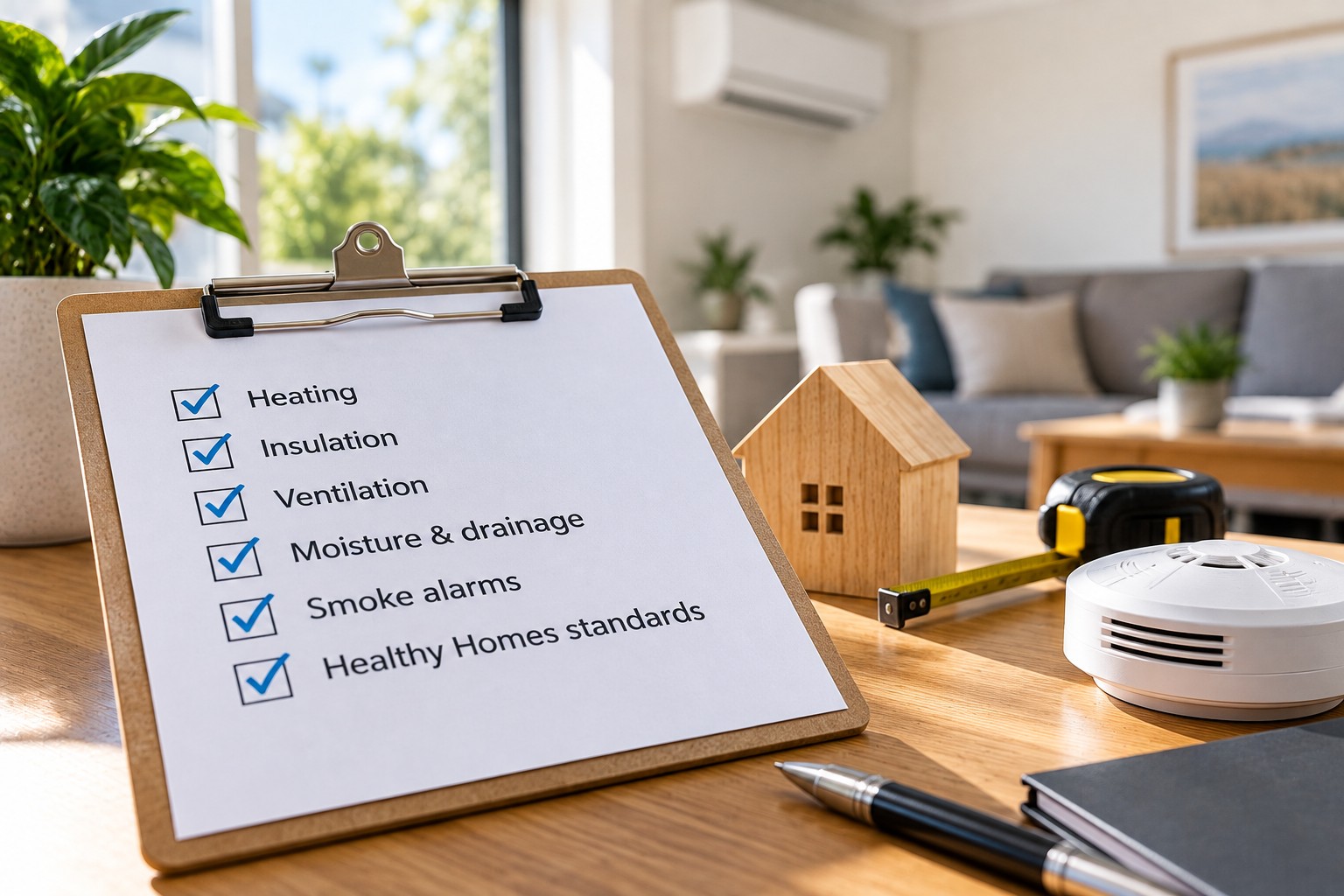
Southland winters are genuinely cold. A property that's easy and affordable to heat, without damp or mould issues, will always be easier to keep tenanted — and it's also simply the right thing to offer. This overlaps heavily with Healthy Homes compliance, which is now a legal requirement for rentals.
Location that works for tenants
Proximity to schools, employment, public transport routes and shops all widen your pool of potential tenants. A property that only suits one narrow type of tenant is inherently more exposed to vacancy.
Low-maintenance materials and layout
Durable flooring, easy-care sections, and a sensible layout (enough bathrooms for the bedroom count, reasonable storage, off-street parking) all reduce ongoing hassle and appeal to a wider range of tenants.
Quick tip
Walk through a potential rental and ask yourself honestly: would I want to live here? It's not a perfect test, but it's a surprisingly good one.
Condition that won't surprise you later
Roof, plumbing, wiring and foundations matter more for a rental than they might for an owner-occupier, simply because you're less likely to notice small issues before they become expensive ones. A building report is worth it even when the price looks like a bargain.
If you'd like a second opinion on a specific property before you commit, I'm happy to walk through it with you.
This is general information only. Always get your own building and Healthy Homes assessments before purchasing.